
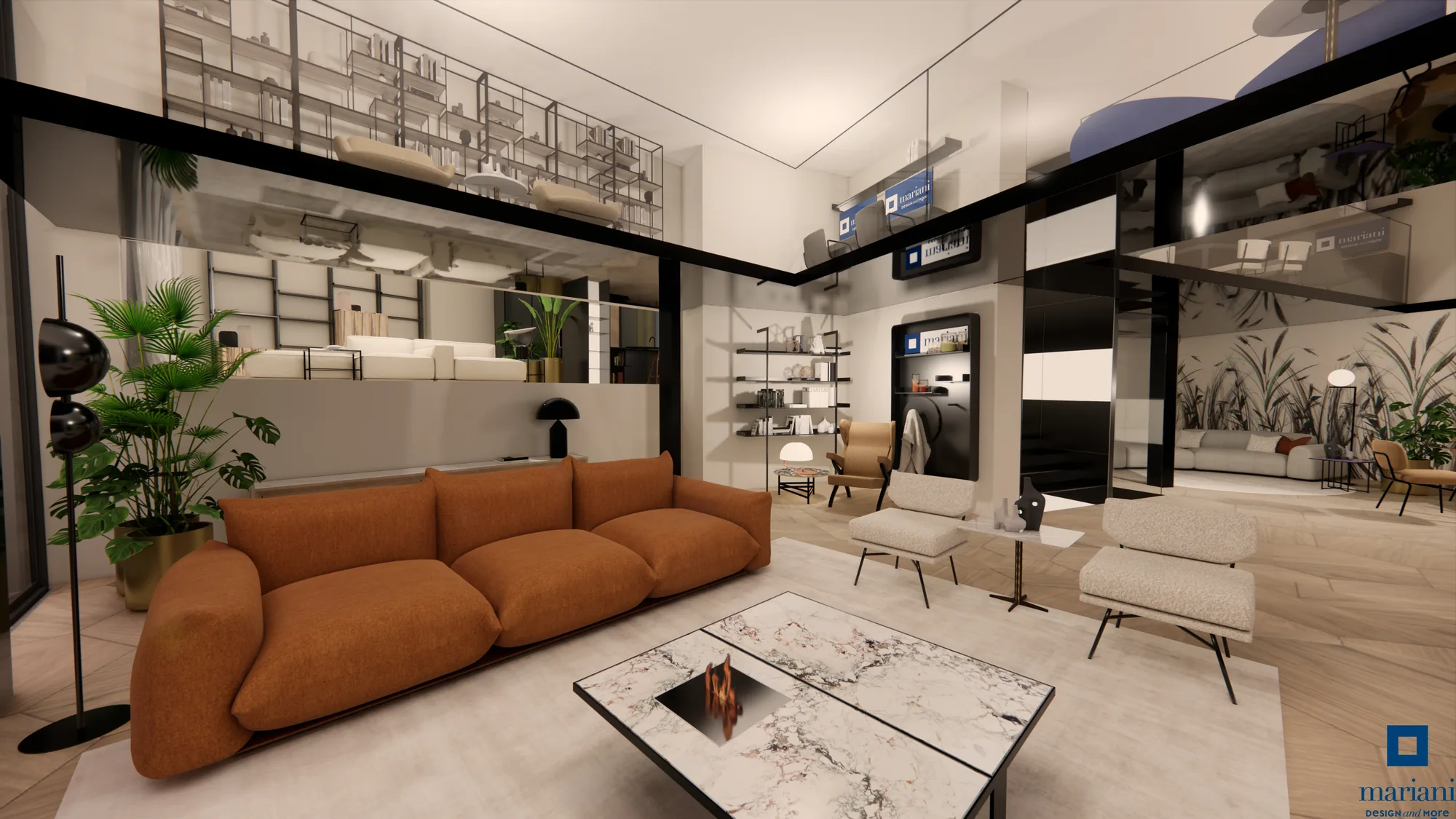
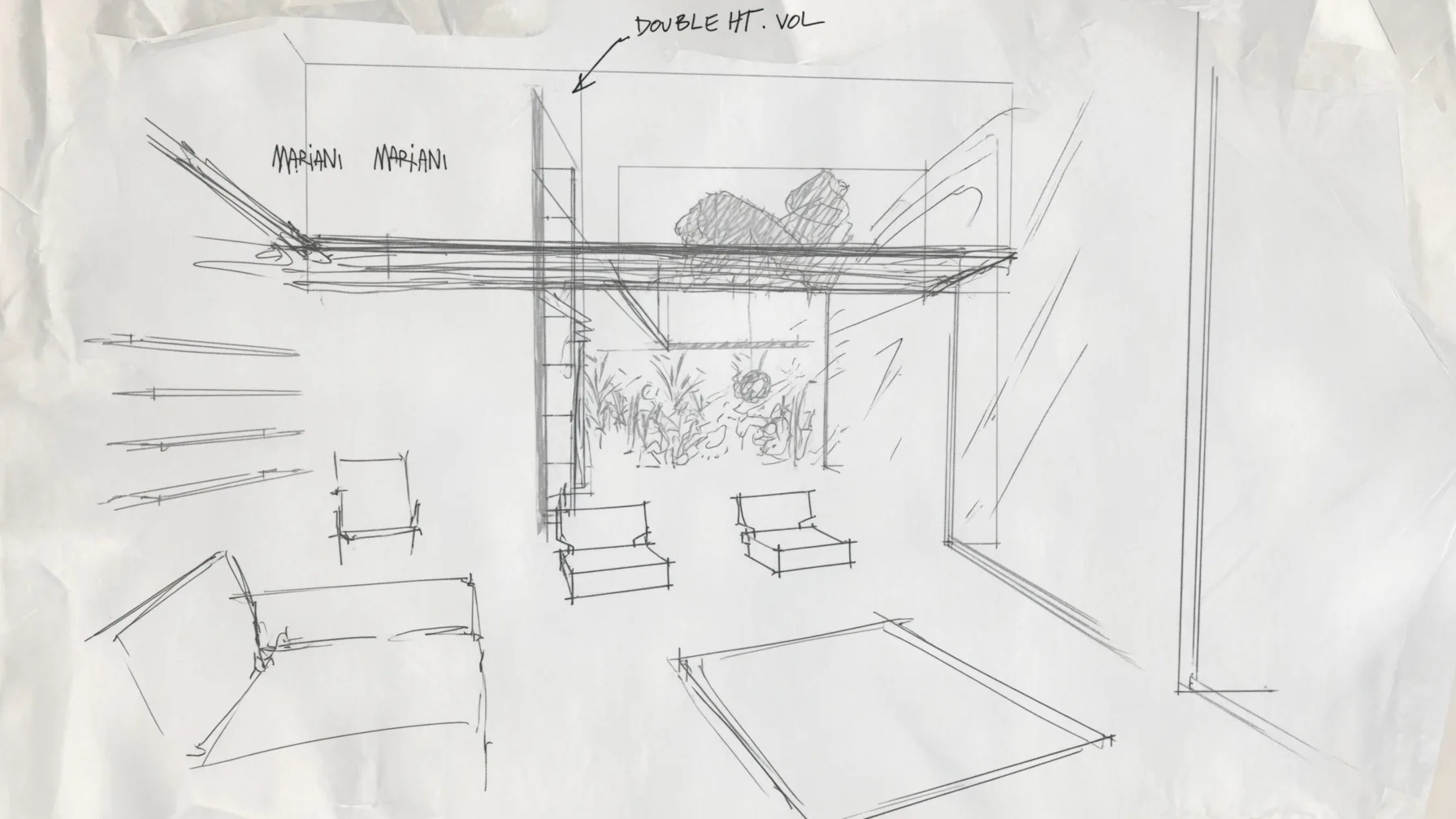
Just ten or fifteen years ago, buying furniture or renovating a home meant one thing: trust. A black-and-white plan, a hand sketch to interpret, a few fabric swatches and a lot of imagination. Today the project is seen as a photorealistic render, walked through in Virtual Reality and refined with the help of artificial intelligence. Has the craft changed? No. What has changed is what you can see before you decide.
How it was: the 2D plan and "trust us"
Anyone who furnished a home before 2015 remembers it well. The project arrived on a sheet of paper: a 2D plan, often black and white, with rectangles that were supposed to become the sofa, the table, the kitchen. Next to it, at best, a hand sketch or a technical elevation. The rest was left to the designer's description — and to an act of faith.
The problem wasn't the skill of whoever was drawing — that was there. The problem was the distance between the drawing and reality: materials were imagined from a swatch, the light couldn't be seen, the proportions lived in the designer's head but not in the client's. Often the "wow" only arrived once the work was finished. And sometimes so did "I didn't expect it like this", when it was too late to change anything.
What changed: renders, Virtual Reality and AI
In little more than a decade, three technologies have changed the way interiors are designed. Not as a special effect, but as a tool to decide better and sooner.
1. The photorealistic render
The render is no longer the "fake-looking" graphic of twenty years ago. Today it reproduces real light, real materials and exact proportions: the oak is that oak, the marble reflects like that marble, the seven-in-the-evening light comes in from the right window. You see the project as it will be, before ordering a single piece.
2. Virtual Reality
The next step is to stop looking at the project and start living it. With Virtual Reality the client puts on a headset and walks through their own home before it even exists: they feel the ceiling height, the real footprint of the table, whether that corridor is genuinely comfortable. The unpleasant surprises — the expensive ones — are removed where they should be: at the design stage.
3. Artificial intelligence
AI speeds up the part that used to be slow and repetitive: generating variants, trying material palettes, simulating layout alternatives in minutes. It doesn't replace the designer — it proposes, and the designer chooses and corrects. The result: more options explored, less time wasted, a more informed final decision.
Then vs now, in short
Materials — from an imagined swatch to the material seen in the render under the right light.
Space — from rectangles on a 2D plan to rooms you can walk through in VR.
Decisions — from "trust us" to "see it with your own eyes" before you start.
See the difference with your own eyes
We've put the two worlds side by side — the hand sketch against the render, the 2D plan against the walkable VR environment — on a dedicated page, with before/after sliders you can move yourself.
Discover the Immersive VR Project →The setting is real: it's our Milan showroom
An important note: the space you see in the render and the VR demo is not a fictional home. It's our real Milan showroom, in the San Babila area — a space anyone can visit. Showing a place that genuinely exists, and that you can walk through in person, is the most honest way to show just how faithful the render is to reality.
The San Babila showroom has recently been expanded, and it's in this new space that you can try Virtual Reality live: you put on the headset and walk through a project, exactly as you would with your own. Seeing the before-and-after on a screen is one thing; feeling it under your feet is another.
Why all this matters (for you, not for us)
The technology isn't the point. The point is what it lets you do: choose with the certainty of knowing how it will look, instead of hoping. For anyone furnishing or renovating, that means fewer second thoughts, fewer unforeseen costs and a final result that truly looks like what you had in mind.
- See real materials, light and proportions before you order
- Walk through the project in VR and remove surprises at the design stage
- Explore more variants thanks to AI, in less time
- Decide with awareness, not blind trust
- The test setting is a real showroom you can visit in Milan
Come and try it in Milan
Milan · San Babila
Via Uberto Visconti di Modrone, 8/a
In the heart of the Design District, in the expanded space where you try VR live.
Arluno
Via Guglielmo Marconi, 12
The historic Mariani space, a few minutes from west Milan.
We've been designing interiors since 1928: three generations of craft, today with today's tools. If you want to understand what it means to see your project before it's built, the starting point is the Immersive VR Project page — or, even better, a visit to the showroom.