
The carcass side is 18 mm almost everywhere. Quality lives elsewhere. Put two kitchens side by side and the spec sheets start to look alike: same thicknesses, same acronyms, same promises. What truly sets a well-built kitchen apart is something you check with your hands, in a showroom, and it rarely shows in photographs. We have put together six checks to take with you.
No tools and no technical background are needed. What it takes is a few minutes of attention, a willingness to open, touch and load, and the habit of asking precise questions. The answers, and the silences, say a great deal.
1. Bespoke: how far you can step outside the module
The first signal comes from a simple question: "Can I have this tall unit at 207 cm high, 64 deep and 120 wide?". Many catalogues work in fixed modules; when the wall does not match, the gap is filled with a blanking panel or simply left empty. With Effeti you step outside the module. Among the orders we followed in 2026 there are tall units of 120×64×207 cm, wall cabinets made to the exact width of the wall, stainless steel bands 3 cm high, side panels 57 cm deep.
These are not exceptions granted as favours: it is how the workshop operates. When the floor plan of the home drives the design, and not the other way round, the result shows in the fillers that are not there and in the lines that run all the way to the wall.
2. The door edge
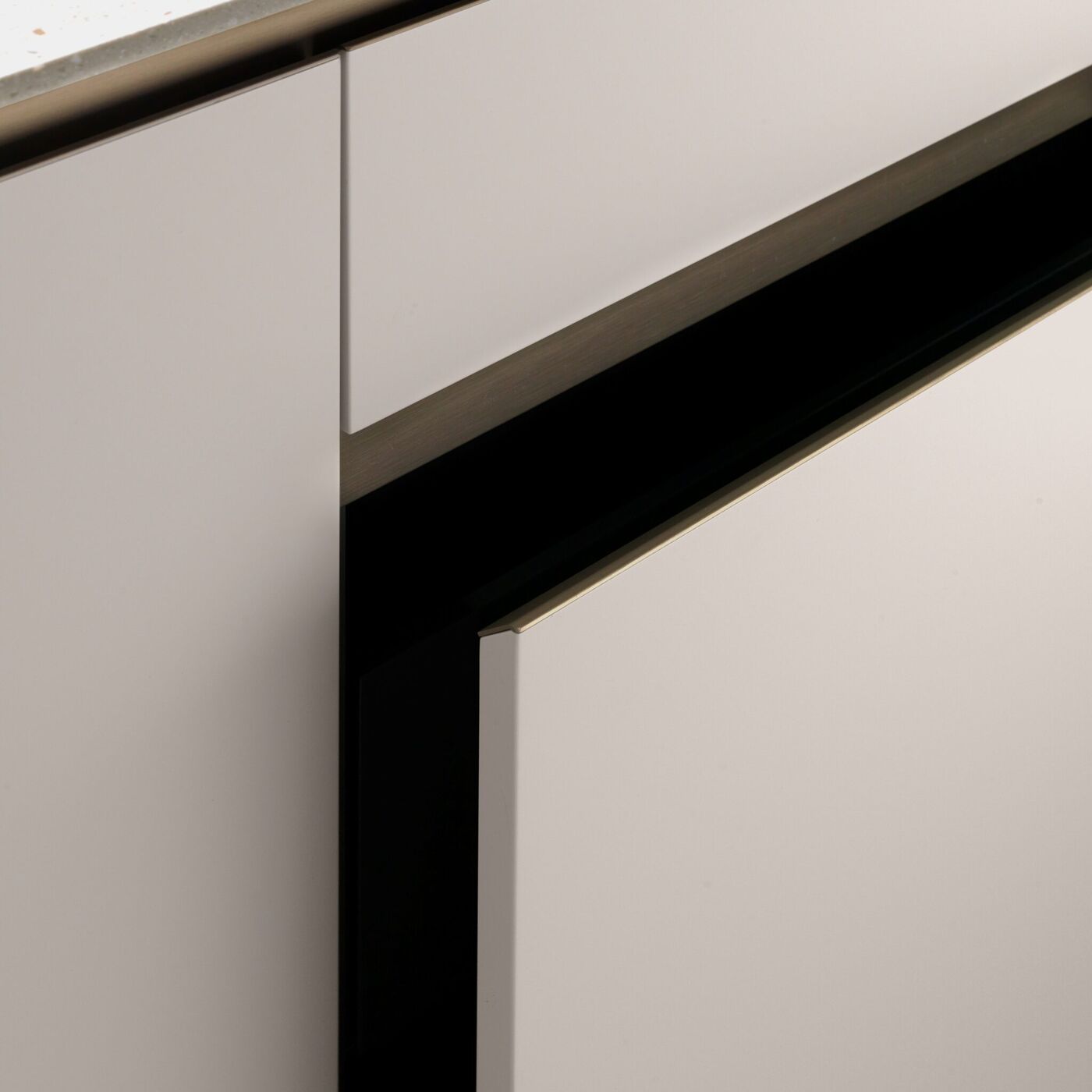
Run your finger along the edge of a lacquered door, then a wood one, then a Fenix one. The edge should be crisp and even, with no steps and no waves. On lacquer, look for the transition between the face and the side of the door: if it is continuous, the lacquer was applied to every side and not only to the visible face. On wood, watch how the grain turns around the edge. On Fenix, check the edging, which should be impossible to feel. It is a ten-second test that says a lot about the factory behind it.
3. The interior
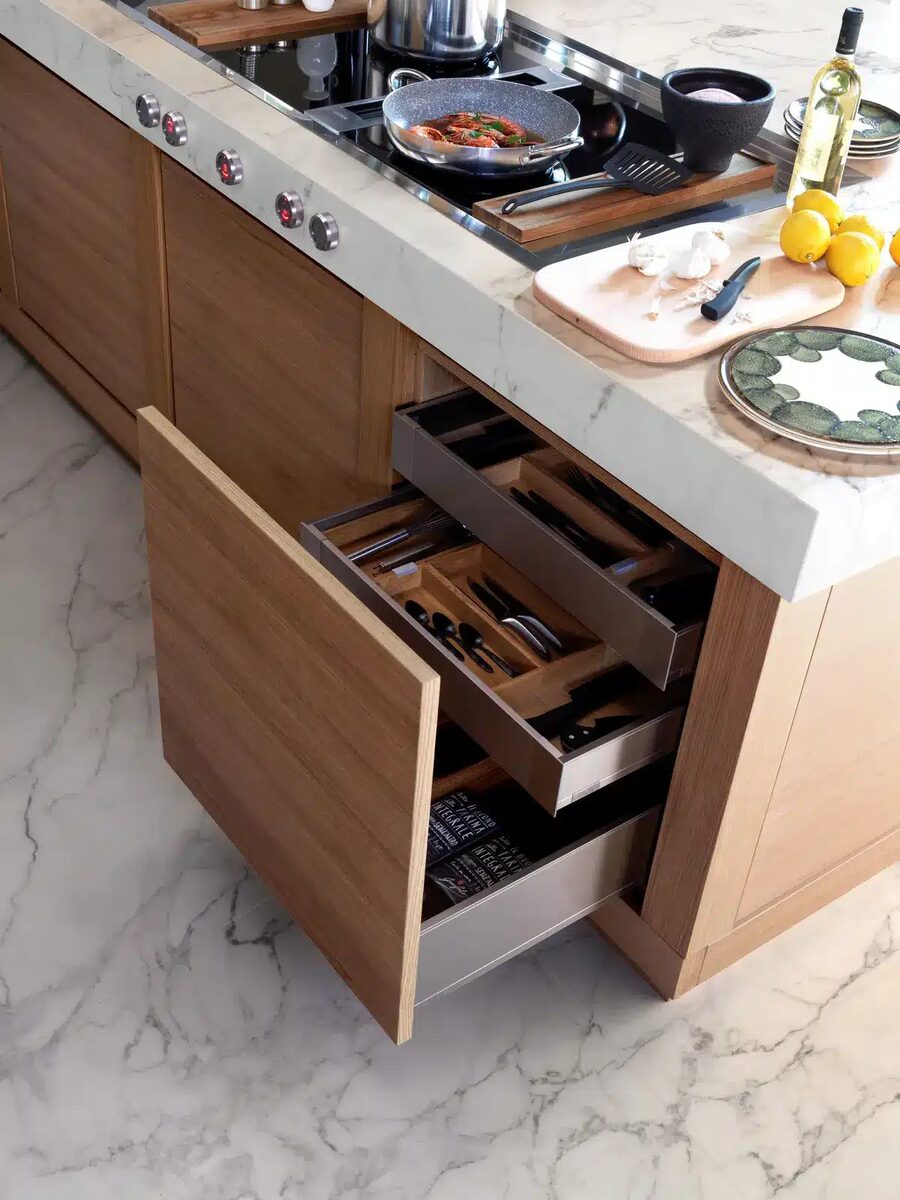
Open a door and look inside: it is where differences hide best. Check the thickness of the shelves, which in Effeti is at least 22 mm. The interiors have a double lining: 120 g melamine plus a protective barrier. The panels are class E1 for formaldehyde emissions. Then look at the sink base, the compartment most exposed to water, and ask how it is protected.
These are details that never appear in renderings and that make the difference after ten winters of pots, dishwashers and steam.
4. The loaded drawer
In a showroom the drawers are empty, and an empty drawer almost always glides well. Ask to have it loaded: pots, plates, something heavy. Then open and close it with one hand and a light push. It should run without tilting and reach the stop in silence. The hardware makes the difference: Effeti fits Blum runners, Legrabox and Tandembox. While the drawer is open, look at the bottom and the sides too: thickness and finish matter, not only the mechanism.
5. Gaps and alignments after fitting
The previous checks concern the factory. This one concerns whoever walks into your home. A well-built kitchen can end up crooked if the fitters lack the time, the experience or the care to adjust every door to the millimetre, level the worktop and close the gaps without visible silicone. The kitchens we sell are fitted by our own team, who know the products because they handle them every day. We wrote about it in Why a well-fitted kitchen lasts thirty years. When you visit a showroom, look at the gaps between the doors: they are the result of the fitting, not of the catalogue.
6. Spare parts ten years on
The last check is a question to ask before signing: what happens if, ten years from now, you need a new door, a hinge or an adjustment? A manufacturer with a long history and in-house production can remake a door in the same finish and supply the correct hardware. A retailer who followed the order keeps its specifications and knows where to intervene. Ask, and listen to how precise the answer is.
Effeti in figures
· Tuscan joinery since 1963, in Barberino Tavarnelle
· 60,000 m² production facility
· Compasso d'Oro 1991 with the Misura programme
· Pocket doors since 1985; E0 groove patented in 2005
· Six patented models
· 38 kitchens for the residences at 75 Kenmare, New York (2019)
· 18 mm carcass sides, shelves 22 mm or thicker
Come and run the checks in person
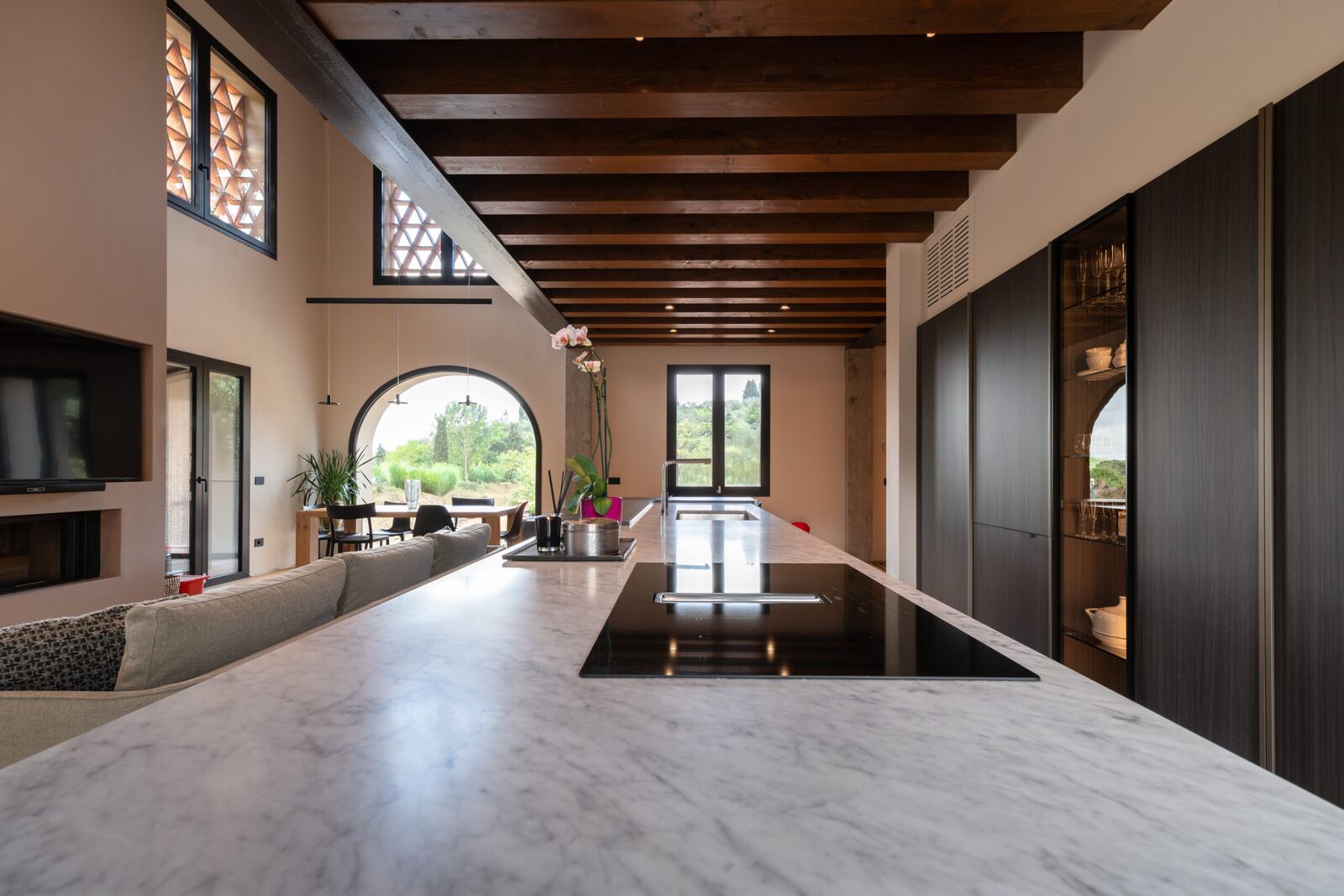
In our showrooms in Milan (Via Uberto Visconti di Modrone 8/a, a short walk from San Babila) and Arluno (Via Guglielmo Marconi 12, 20004) you can open, touch, load a drawer and compare at your own pace. You will find the collections and our experience with the brand on the Effeti page. And if you are choosing between two brands we both know closely, we have described the differences in Poliform or Effeti? We have sold both.